

FEATURED RESEARCH
Regenerative Therapy for Female Reproductive Diseases
Uterine Microenvironment Regulation Mechanism Study
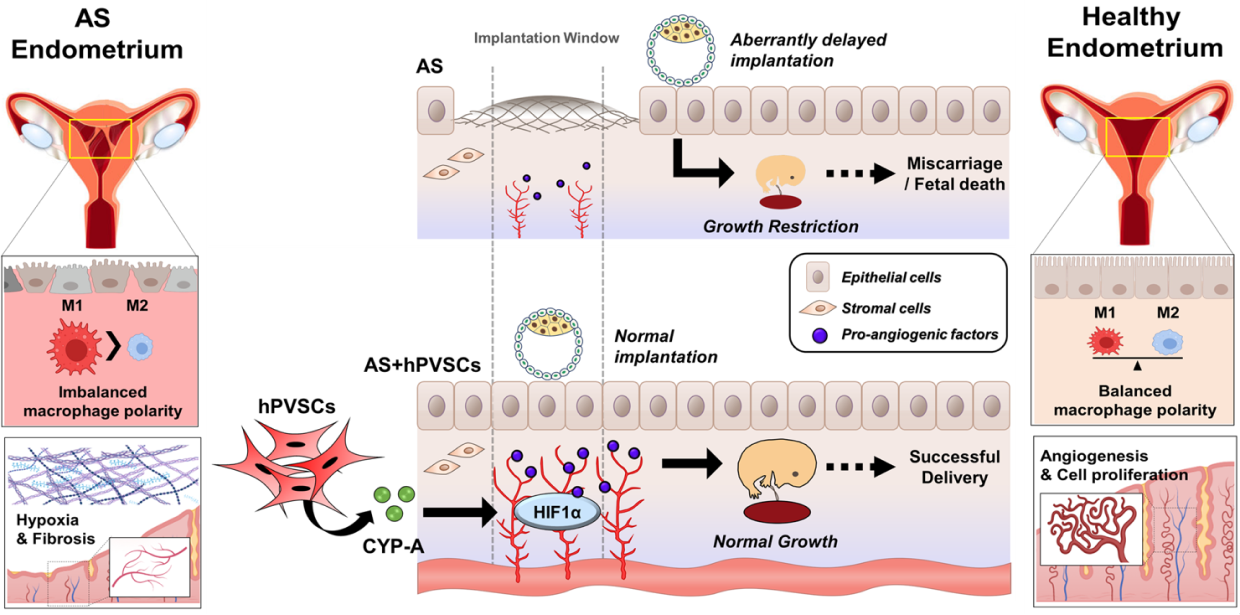
Uterine Microenvironment Regulation Mechanism Study
Human placenta-derived perivascular stem cells & Cyclophilin-A
Uterine environment normalization via hypoxia-inducible factor
Successful fetal growth and live birth achieved
Patent No. 10-2370535, 10-2477288

Investigating histological and functional recovery of the uterine environment in Asherman's Syndrome (AS) models using stem cells and their derivatives. hPVSCs (human placenta-derived perivascular stem cells) and CYP-A modulate the HIF1α pathway to promote normal implantation and fetal growth.

Analyzing the interactions among epithelial cells, stromal cells, and pro-angiogenic factors in the endometrium to elucidate the mechanisms that establish normal receptivity during the implantation window.

Developing strategies to correct M1/M2 macrophage polarity imbalance observed in AS endometrium, restoring a balanced immune environment similar to that of healthy endometrium.

Inhibiting hypoxia and fibrosis in AS environments using stem cell-derived factors, while promoting angiogenesis and cell proliferation to induce tissue regeneration.